










RiverCityMalone.com

On the issues that matter in Malone NY (USA)

Have you ever met a saint?
Part 2: The Historical Jesus of Nazareth

Picture of Calvin Luther Martin, PhD

Calvin Luther Martin, PhD

February 12, 2026

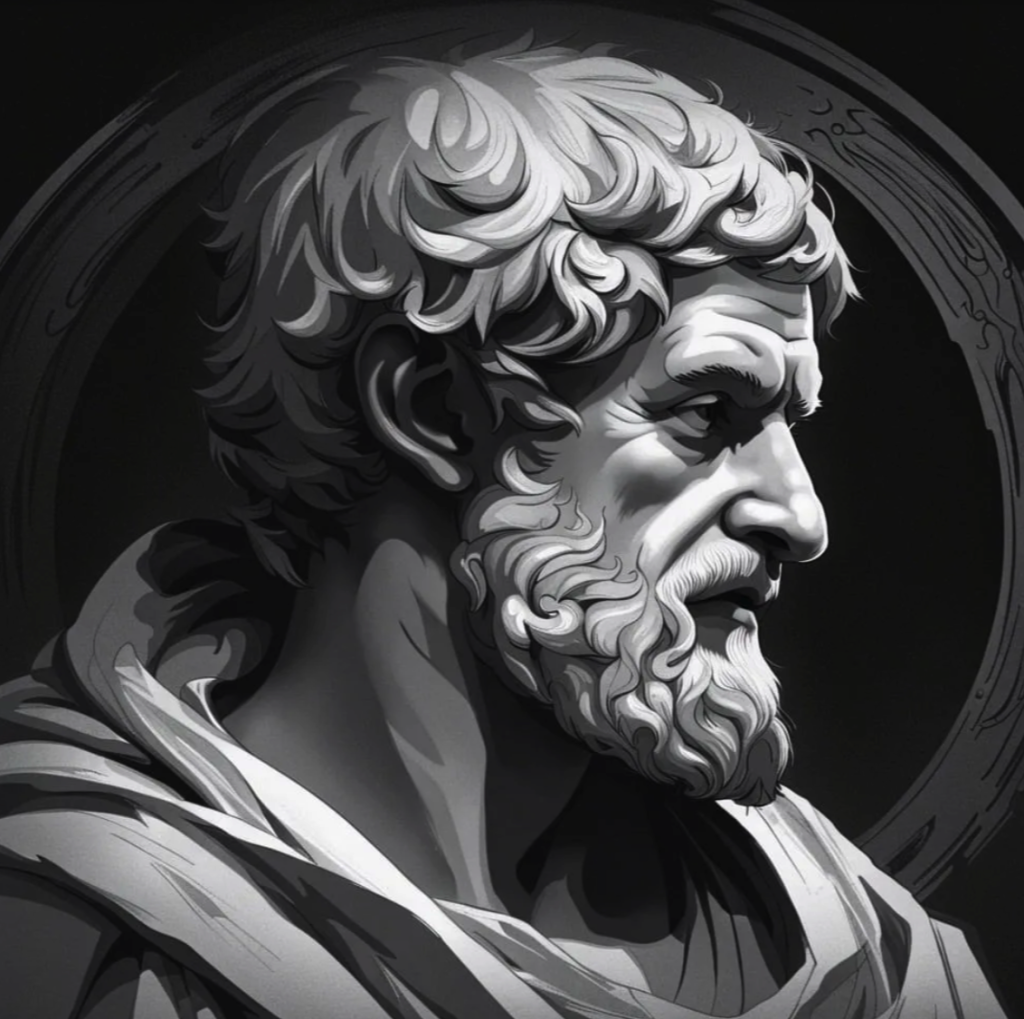
Flavius Josephus

The man you never knew about,
who
knew all about Jesus

Flavius Josephus
author of
“The Antiquities of the Jews” (AD 93/94)

Before reading what Josephus wrote about Jesus, below,
it's important to realize that
he was
not a Christian.

Here is what Josephus wrote in Greek:

Γίνεται δὲ κατὰ τοῦτον τὸν χρόνον Ἰησοῦς σοϕὸς ἀνήρ, εἴγε ἄνδρα αὐτὸν λέγειν χρή· ἦν γὰρ παραδόξων ἔργων ποιητής, διδάσκαλος ἀνθρώπων τῶν ἡδονῇ τἀληθῆ δεχομένων, καὶ πολλοὺς μὲν Ἰουδαίους, πολλοὺς δὲ καὶ τοῦ Ἑλληνικοῦ ἐπηγάγετο· ὁ χριστὸς οὗτος ἦν. καὶ αὐτὸν ἐνδείξει τῶν πρώτων ἀνδρῶν παρ’ ἡμῖν σταυρῷ ἐπιτετιμηκότος Πιλάτου οὐκ ἐπαύσαντο οἱ τὸ πρῶτον ἀγαπήσαντες· ἐϕάνη γὰρ αὐτοῖς τρίτην ἔχων ἡμέραν πάλιν ζῶν τῶν θείων προϕητῶν ταῦτά τε καὶ ἄλλα μυρία περὶ αὐτοῦ θαυμάσια εἰρηκότων. εἰς ἔτι τε νῦν τῶν Χριστιανῶν ἀπὸ τοῦδε ὠνομασμένον οὐκ ἐπέλιπε τὸ ϕῦλον.

Elsewhere in the same 20-vol. book, he wrote these lines:

ἅτε δὴ οὖν τοιοῦτος ὢν ὁ Ἄνανος, νομίσας ἔχειν καιρὸν ἐπιτήδειον διὰ τὸ τεθνάναι μὲν Φῆστον, Ἀλβῖνον δ’ ἔτι κατὰ τὴν ὁδὸν ὑπάρχειν, καθίζει συνέδριον κριτῶν καὶ παραγαγὼν εἰς αὐτὸ τὸν ἀδελϕὸν Ἰησοῦ τοῦ λεγομένου Χριστοῦ, Ἰάκωβος ὄνομα αὐτῷ, καί τινας ἑτέρους, ὡς παρανομησάντων κατηγορίαν ποιησάμενος παρέδωκε λευσθησομένους.

Here it is in English:

And in this time, there was a certain Jesus, a wise man, if indeed one ought to call him a man, for he was a doer of incredible deeds, a teacher of men who receive truisms with pleasure.

And he brought over many from among the Jews and many from among the Greeks. He was [thought to be] the Christ.

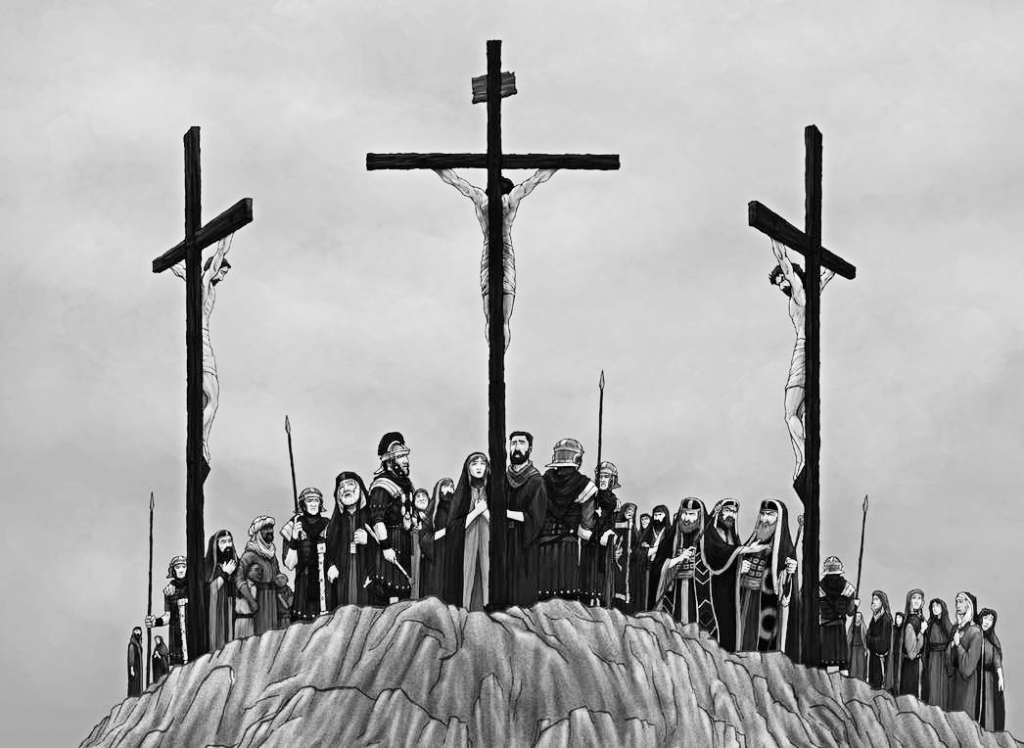
And, when Pilate had condemned him to the cross at the accusation of the first men among us, those who at first were devoted to him did not cease to be so, for on the third day it seemed to them that he was alive again given that the divine prophets had spoken such things and thousands of other wonderful things about him.

And up till now the tribe of the Christians, who were named from him, has not disappeared.

Again, here it is in English:

Because Ananus [the High Priest] was of this [persuasion], he considered he had a fitting opportunity since Festus [the Roman procurator] had died and Albinus [the new procurator] was still on his way. He assembled the Sanhedrin of judges and, bringing before them the brother of Jesus, who was called Christ, whose name was James, and certain others, he made an accusation against them as breakers of the law, and delivered them over to be stoned.

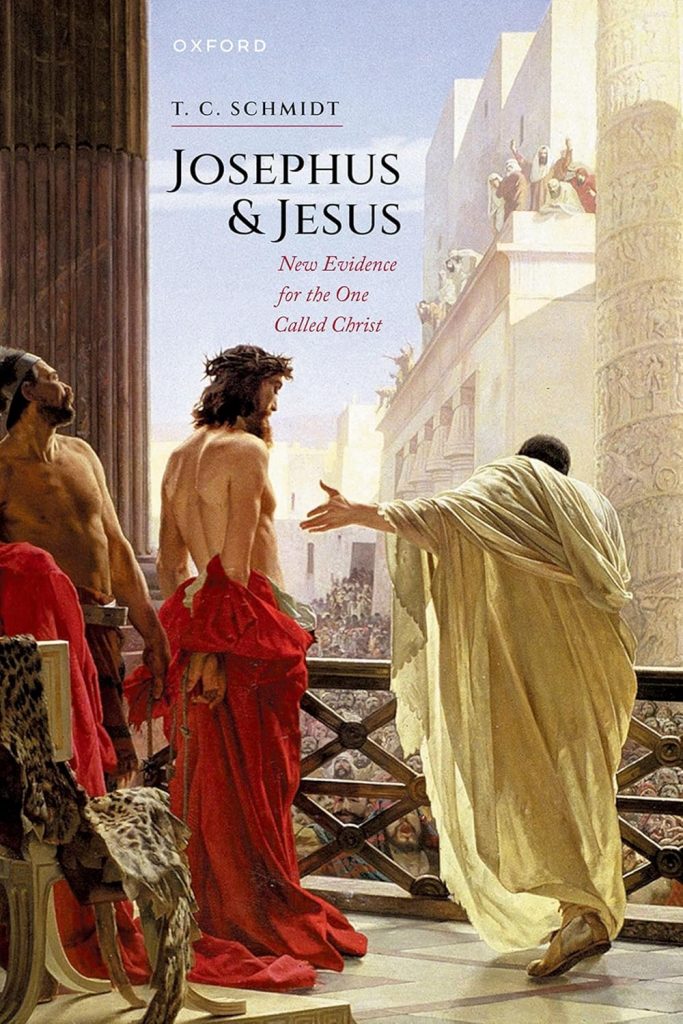
You just read the “earliest description of Jesus given by a non-Christian,” writes Prof. Schmidt.

So famous is what Josephus said that scholars have given his account of Jesus its own name: the Testimonium Flavianum.[1]Schmidt, p. 1.

Not only this, but this description of Jesus was written by a man who was familiar with many of the principal people in the whole Jesus story, among them very likely some of the disciples, and almost certainly the apostle Paul (another Pharisee, by the way), and the individuals in the Sanhedrin who participated in Jesus’s trial and execution, and, not least, people in Galilee[2]Pronounced “Gal-lel-lee.” who had known Jesus — and perhaps even been healed by him.

This makes Josephus a phenomenal witness to the Jesus narrative: its authenticity and its significance at the time. By the way, Josephus’s account of the proceedings of the Sanhedrin and role of the High Priest at Jesus’s trial all corroborate what the Gospel writers (Matthew, Mark, Luke, and John) wrote.

Now, some clarifications
The Old Testament God (Jehovah/Yahweh)

Martin Luther essentially made the same point. The crux of his case against the Roman Catholic Church was that one must have faith in Jesus ("faith, alone," as he put it) and not rely on performing the rituals and teachings of the Church. That is, he emphasized a personal faith in Jesus, not faith in the Bible per se.
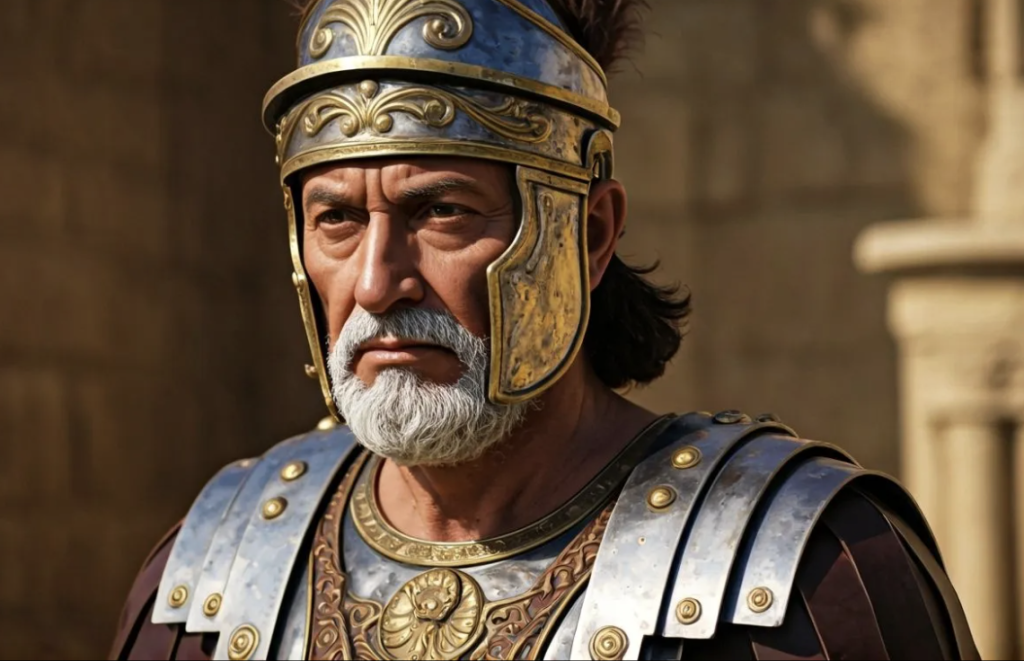
Pontius Pilate
Roman Procurator over Judaea


A preview of where we're headed

Up till now, you were probably under the impression that everything we know about Jesus is confined to the four Gospels (Matthew, Mark, Luke, John) and Paul’s letters (called epistles), along with letters from several other disciples — all of this contained in the New Testament.

Now, pay close attention to what I’m about to say. Josephus’s account of Jesus of Nazareth takes Jesus out of the Bible and inserts him into a larger sphere of interest. With Flavius Josephus’s 20-volume history of the Jews (published in AD 93 or 94), we have a non-Christian and non-religious source telling us that Jesus was a most extraordinary individual — extraordinarily wise and a doer of extraordinary deeds. 

The implication is that Jesus of Nazareth knew things the rest of us don’t grasp. I quote Josephus, again:

There was a certain Jesus, a wise man, if indeed one ought to call him a man, for he was a doer of incredible deeds, a teacher of men who receive truisms with pleasure.

One can infer from Josephus’s remarks that Jesus knew things that transcend our usual understanding of religion, theology, and even philosophy.

It's as if Jesus climbed up a stairway out of the muddled way of thinking and engaging with the world around us — and walked out into the light.

Plato discussed this phenomenon.

One can go further and say Josephus implies that Jesus knew things which go beyond, or are outside, our understanding of the way reality works.

Pause. Take a deep breath. “The way reality works.” Hmm, this sounds like we’re drifting over into physics.

You’re right. We are.

The acknowledged authority on “the way reality works” (i.e., what we now call physics) in Josephus’s time was Aristotle.[3]Pronounced “Aris-totle.” Back then, the word “physics” wasn’t used; it was called “natural philosophy.”

Aristotle

We can now rephrase what Josephus said about Jesus, putting it in a modern idiom (modern “way of speaking”): “Jesus,” writes Josephus, “is said to have conducted himself and done things and known things that don’t conform to Aristotelian principles of reality.” In saying this, Josephus would be correct — but this doesn’t make Jesus wrong. (Actually, as I will show, it was Aristotle who was wrong.)

The Greek Puppeteers

Left to right: Aristotle, Plato, Socrates

Remember what I said in the first article (lecture) about the Greek puppeteers, and how wrong they were? I invoked Nietzsche[4]Pronounced “Neet-she.” in support of this. 

Two thousand years after Aristotle and Josephus and the Gospel writers and St. Paul, we have a better idea of the reality and consciousness that Jesus was tapping into. This is where we’re going with this series of articles.

I am going to take Jesus out of religion and theology and conventional philosophy and move him into a physics most of you don’t know about. The reason you don’t know about it is because 20th-century physicists found it too “spooky” (Einstein’s word for it) and, more importantly, too impractical for their purposes. Yes, I include Einstein in this list of nay-sayers. (In his later years, Einstein tried to refute this newly-perceived dimension of physics, and failed spectacularly.)

Next article in this series

The apostle Paul

We’re not yet done with the “historical” Jesus. That is, Jesus in his time and place: Palestine in the first century AD.

We need to take up St. Paul, who is an interesting counterpoint to Josephus. Paul would have been some years older than Josephus. Both men were Pharisees. Neither man met Jesus in person. 

Paul began his adult career as a rabid critic of Jesus and his followers. He literally hunted them down.

Then, something dramatic happened: Paul had an epiphany. He experienced a bizarre event that he interpreted as an encounter with Jesus in a non-bodily form.

The rest is history. Paul did a 180 degree about-face and became the chief spokesman and architect of Christianity as we understand and practice it to this day.

This, ladies and gentlemen, is very interesting and worth exploring.

Facebook
Twitter
LinkedIn

References

References
1 Schmidt, p. 1.
2 Pronounced “Gal-lel-lee.”
3 Pronounced “Aris-totle.”
4 Pronounced “Neet-she.”