RiverCityMalone.com

On the issues that matter in Malone NY (USA)

Have you
ever
met
a
saint ?

Part 1

Picture of Calvin Luther Martin, PhD

Calvin Luther Martin, PhD

February 4, 2026

Have you ever met a saint?

I haven’t either.

In my 78 years of life I have met a lot of people; some very impressive. I have known two Nobel laureates personally. One a physicist (Eugene Wigner),[1]Pronounced “Vigner.” the other a writer (John Coetzee).[2]Pronounced “Khut-see.” 

Prof. Wigner and Mr. Coetzee achieved the highest acclaim possible in modern society. Wigner helped make atom bombs and Coetzee’s novels explained the evils of South African  apartheid. 

Neither man, however, made any pretense of being a saint — someone who reflects and somehow embodies Jesus of Nazareth in an extraordinary manner, a manner noticed and commented on by everyone they encounter. A manner that somehow enables this individual to dispense grace — the operative word — to a seemingly superhuman degree. Grace, we are told, that at times has healed others physically or in their spirit and mind.

I  must say that among the thousands of individuals I have encountered over the course of my life — scholars, theologians, ministers, laypeople — not one struck me as walking with Jesus as I just described. This includes myself. I hasten to say, I don’t fault these people. Not at all. Such a walk is a little like walking on water — isn’t it?

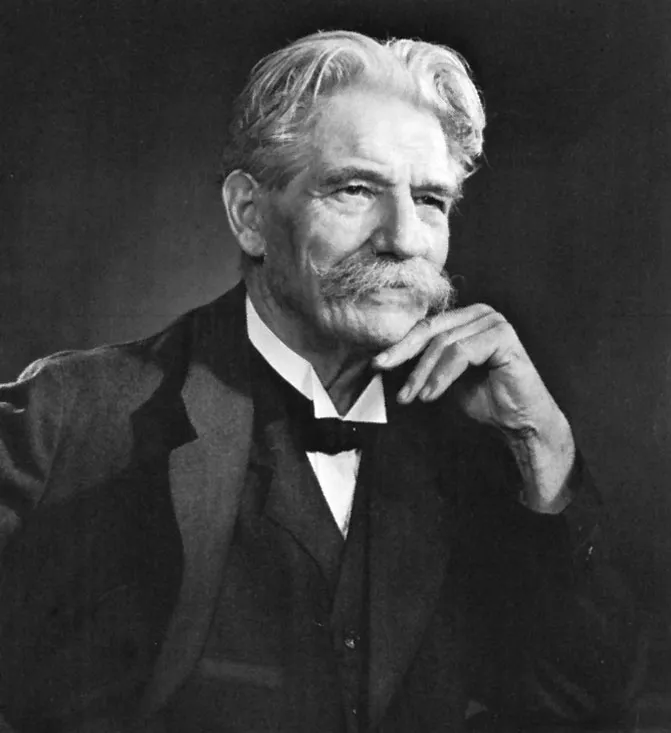
Jesus has fascinated me ever since I can remember. For one thing, my dad was a preacher. I attended a Christian college. When I became a scholar and university professor, I dove deeply into the historical Jesus, following the footsteps of Albert Schweitzer, MD, PhD, ThD,  whose doctoral thesis was turned into a bestseller, “The Quest of the Historical Jesus.” I recommend reading it. (Schweitzer[3]Pronounced “Sh-white-sir.” was a true saint. I don’t think anyone would dispute this.)

I plunged into the teachings of Jesus as explored by literary figures, theologians, and philosophers  — 2,000 years of more or less cogent commentary on the man and the impact he made on humanity and history.

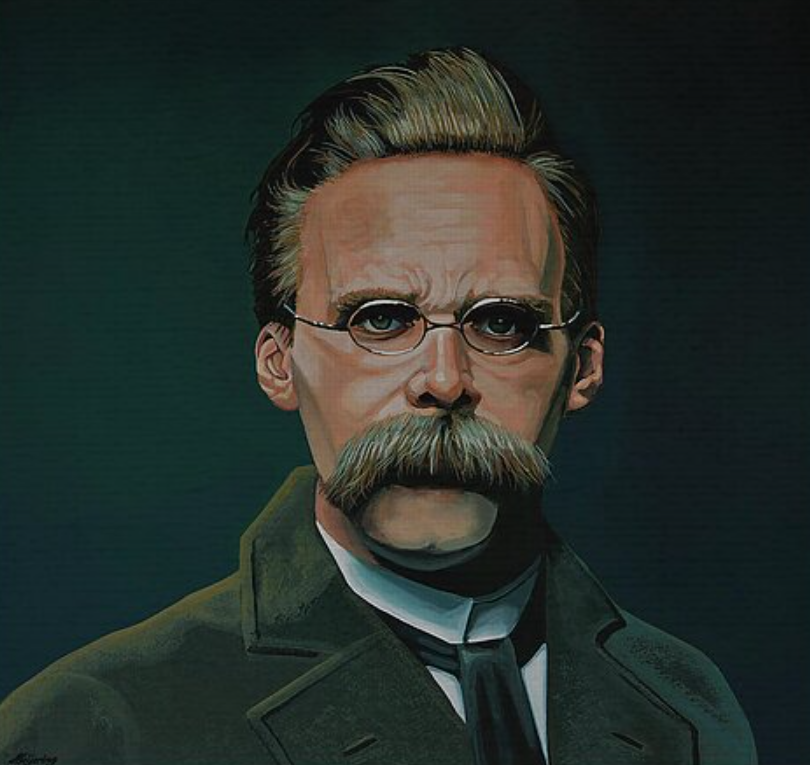
Among the philosophers, certainly the most interesting was Friedrich Nietzsche,[4]Pronounced “Freed-rick” and “Neet-shee.” who, it may surprise you, was an ardent admirer of Jesus. Read Nietzsche’s “Beyond Good and Evil” and especially, “Thus Spoke Zarathustra,[5]Pronounced “Zara-thoostra.” wherein Nietzsche creates a saintly figure named Zarathustra clearly modeled after Jesus. Nietzsche had a problem with the Jewish and Christian concept of God. He is famous for declaring, “God is dead,” although 99% of people, including clergymen and college professors who trot out this phrase, don’t grasp what Nietzsche meant by it.

Nietzsche, I repeat, did not have the slightest problem with Jesus, which is intriguing for a philosopher who literally called himself a hammer, smashing all the Greek and subsequent philosophers up through Immanuel Kant.[6]Rhymes with “Kont” or “Kawnt,”

Albert Schweitzer, MD, PhD, ThD
Prof. Friedrich Nietzsche, PhD

Jesus of Nazareth is the one philosopher — yes, we can call him this — he didn’t reduce to rubble. “Truth to tell, there never was more than one Christian, and he died on the cross.”[7]Nietzsche, Twilight of the Idols, with the Antichrist and Ecce Homo, trans. Ludovici (2007), p. 128. (I will take up this interesting idea in another article.)

The reason for Jesus’s  exceptionalism is hinted at in these two images: He knew something about the Judaean [8]Pronounced “Jew-dee-an.” wilderness that none of the other philosophers and religious teachers knew. Nor do you.

How he knew it, I have no idea. Jesus also knew the true nature of the phenomenon we unsatisfactorily call God, again, from the Judaean wilderness.

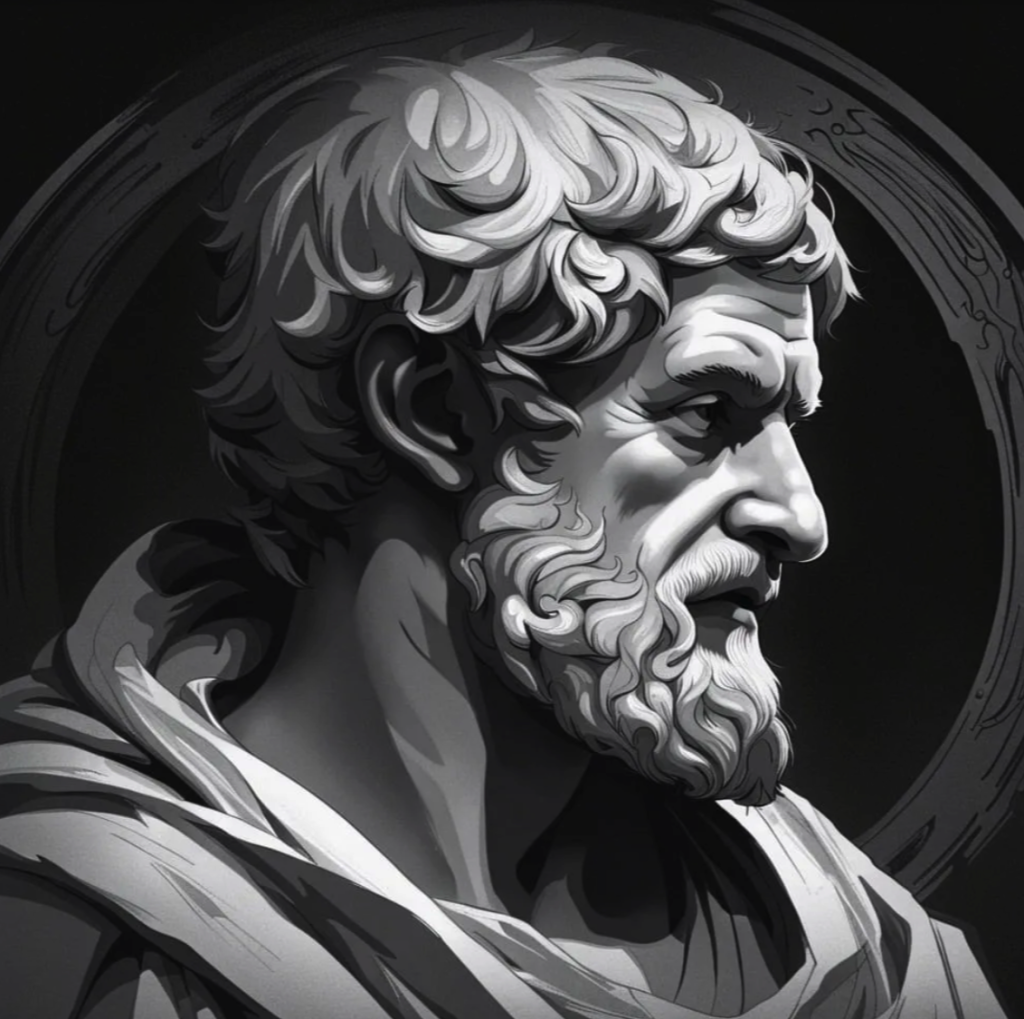
But I am getting ahead of myself. Nietzsche is a story for another time, a story worth your paying attention to, regardless of who you are. Whether you are aware of it or not, you are acting out and unwittingly defining yourself by the philosophical, theological, scientific, and historical teachings of all these famous bygone intellectuals, foremost being Aristotle,[9]Pronounced “Aris-totle.” whom I may explain (in language I believe you will understand) in a future article. 

And it’s the wrong wisdom!

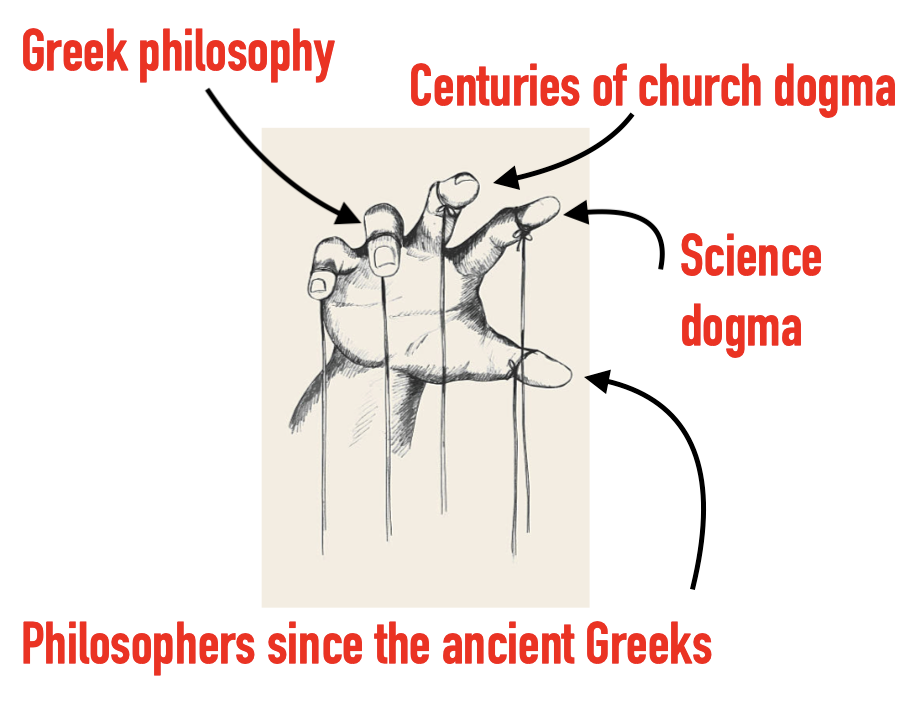
Let me put this more vividly, for I don’t want to leave you with any doubt about what I’m saying and its significance. You are a puppet acting out 10,000 years of explanation and dogma of how the world and universe work, and what they mean, and our human role within the whole shebang — explanations and doctrines set up as channel markers for the rest of humanity (you and me, in other words) by religious teaching and philosophy and, beginning in the Renaissance,[10]Pronounced “Ren-ai-sance.” by science right up to the present moment.

Aristotle
Look carefully at this image. The woman doesn't think she's a puppet. But she is. Her shadow confirms it.

The only problem — and it’s fatal — is that those channel markers and the course they set for humanity — yes, including everyone reading this page — were false guides. It is Nietzsche’s genius that he pointed this out. (He called Socrates[11]Pronounced “Sock-ra-tees.” a clownish dialectician. Immanuel Kant:[12]Rhymes with “Kant” or “Khant.” an idiot.) 

Ten thousand years of mostly bullshit.[13]Pronounced “bull-shit.” Like “horseshit,” just a different critter. 

Mind you, I’m not implying that Nietzsche’s analysis of humanity and the cosmos was any better than theirs; in fact, it was disastrous. I’m simply saying that he recognized there was a huge problem.

The parameters these individuals identified and taught to explain the human condition and what it means to be human — are a fiasco. Virtually all the great thinkers ignored or rejected or omitted the most important parts, the parts showing us what it means to be a saint — or, if you prefer, that show us what it means to be fully participating and fully present in the Amassing Harmony that Christians refer to as God.

You don’t need to have read the work of these people. You don’t need to be able to say a single intelligent word about what they thought or taught. The point is, they created the mindset you and I call normal — the way of thinking and conducting our daily lives that we take for granted, like breathing.

Through the ages, these bunglers were enshrined as geniuses. Their ideas were taught to subsequent generations of intellectuals who, in turn, passed these doctrines and wisdom on to the rest of humanity, which wandered further and further away from the Amassing Harmony (God).

Thus leaving you and me in freefall. An “existential”[14]Rhymes with “essential.” freefall. (“Existential” simply means “your sense of who you are.” Your sense of your existence, in other words. People who commit suicide feel their existence is horrible, black, and pointless.)

In the next installment of these articles, I will get at the nature of this Amassing Harmony. Meanwhile, it may comfort and strengthen you to know that Jesus taught and lived and was literally fully present in this Amassing Harmony. 

The interesting thing (“interesting” being a weak adjective for what I’m about to say) is that he thought — more than thought, he knew that humanity could likewise live and be fully present in this Amassing Harmony. (Go ahead and refer to it as God, if you like.)

I am not naïve enough to think that humanity will or even can alter course. We are doomed. We have followed this misguided trajectory for so many thousands of years, there’s not the slightest chance we will alter course.

But, you can alter course. You, individually. And that’s why I’m writing this series of articles.

Perhaps it’s a symptom of my being old, for I must tell you that all the scholarly and popular wisdom, spoken or on the printed page, about Jesus now leaves me cold. This is an astonishing admission from someone who, for two years, was a professor at a seminary engaged in training future pastors. 

At this time in my life, like Nietzsche (another minister’s son, by the way), I yearn to be in the presence of a saint. In the presence of someone who might easily be taken for Jesus. Someone who walks with this Presence so intimately that you and I would be hard-pressed to distinguish between that individual and the Presence of Jesus.

Walking with Jesus
Having the faith of a child

Walking with Jesus, that is, trusting him (Him) in absolute, child-like faith, seems relatively easy, even natural, when we are very young. Even as we walk through something terrifying and incomprehensible.

Maybe, just maybe, it’s because as children we are sufficiently irrational or naïve or absolutely and unambiguously trusting that we can easily —  dare I say naturally? — grasp the phenomenon of Jesus as something that completely fills our consciousness and being. (Although a child certainly doesn’t use academic words like “consciousness” and “being.”)

Notice that this ease of trust, of faith, is the norm in the preliterate (nonliterate) stage of our life. Which is another way of saying that, as little children, having this trust and faith is as obvious, unremarkable, unexamined, and natural as breathing. 

Preliterate and nonliterate mean that an individual or even an entire society does not read or write. This is different from illiterate, which refers to someone raised in a literate culture who, for whatever reason, cannot learn to read or write.

This is enough for today. Part 2, which has the same overall title (“Have you ever met a saint?”) will take up the historical Jesus. By this I mean, Jesus as the majority of academic historians and academic theologians understand him. 

No, don’t be afraid of this. It may actually liberate you and deepen and widen your faith. Your faith is  essential. I will say nothing in these articles — lectures? — that will diminish your faith, regardless of whether you are Catholic or Protestant. You have my solemn promise.

The Greek Puppeteers

Left to right: Aristotle, Plato, Socrates

While I am at it, don’t be afraid of the academics and scholars, including the Greek intellectual giants: I assure you, I can handle them all. As Nietzsche  made clear, they were all rather pitiful, if only because their understanding of the nature of reality and the universe itself was desperately impoverished. And yet I will take you well beyond Nietzsche’s critique of his predecessors.

I will take you beyond the grasp of the puppeteers, Greek and otherwise. Jesus was not one of them. And herein lies your peace.

Fundamentalist Christians may well find Part 2 vexing. It may come as a surprise to hear me say that I have no quarrel with fundamentalists. I’ll go further and say that I have no quarrel with anyone’s understanding of and belief in Jesus. 

My issue with fundamentalists is that their grasp of Jesus and, by extension, their grasp of what they call God is as if these people were living in a box. I am convinced fundamentalists and other Christian “believers” and “born againers” can have a much richer and more profound and even exhilarating understanding of Jesus than they currently have. (Incidentally, I don’t use the term “born againer”  pejoratively. Believe it or not, I’m all for it — exactly as Jesus is said to have insisted on and described it.)

Born again. He nailed it. Born again into the Amassing Harmony he knew and lived.

Facebook
Twitter
LinkedIn

References

References
1 Pronounced “Vigner.”
2 Pronounced “Khut-see.”
3 Pronounced “Sh-white-sir.”
4 Pronounced “Freed-rick” and “Neet-shee.”
5 Pronounced “Zara-thoostra.”
6 Rhymes with “Kont” or “Kawnt,”
7 Nietzsche, Twilight of the Idols, with the Antichrist and Ecce Homo, trans. Ludovici (2007), p. 128.
8 Pronounced “Jew-dee-an.”
9 Pronounced “Aris-totle.”
10 Pronounced “Ren-ai-sance.”
11 Pronounced “Sock-ra-tees.”
12 Rhymes with “Kant” or “Khant.”
13 Pronounced “bull-shit.” Like “horseshit,” just a different critter.
14 Rhymes with “essential.”