





Have you ever met a saint?
Part 2:
The Historical Jesus of Nazareth
Part 2:
Calvin Luther Martin, PhD
February 12, 2026
This is the first of several articles on the historical Jesus.
Be sure you read Part 1 of this series before you read this article (Part 2). Without reading Part 1, this article won't make complete sense to you. Besides, Part 1 gives an overview of this entire series, laying out my goals.
Part 3 will take up the apostle Paul (St. Paul) and Jesus.
To read this properly, with all the images and formatting in their proper place, you will need to read this on a laptop or desktop. Not on a tablet and certainly not on a cellphone. If you attempt to read this on your tablet or cell, the formatting will be screwed up.
Note that names of individuals and books are written in white or orange text. This means the text is hotlinked to a source explaining who this individual is. Click on it and it will open a separate window.
As you read, you may see a superscript footnote number following the names of individuals that you may not know how to pronounce. If you click on the footnote number, you will be taken to the Footnotes section at the bottom of the page, where I provide a pronunciation guide. Names like Friedrich Nietzsche, Immanuel Kant, and Zarathustra.
When you are done reading the footnote at the bottom of the page, simply click on the "up arrow" next to the footnote number and — voilà! — you will be automatically taken back to the spot you were reading in the text.
Click the X in the upper right-hand corner to make this box disappear.
The man you never knew about,
who
knew all about Jesus
-
Josephus was a Jew born in Jerusalem in AD 37, four years after Jesus was executed.
-
He was born to a prominent family. His father was a Pharisee (i.e., member of the Jewish religious and governing body).
-
It is likely his parents witnessed Jesus's crucifixion during the Passover in AD 33. The trial was a big deal before the Jewish Sanhedrin (court). According to Jewish law, everyone who had a residence in Jerusalem was expected to attend the Passover feast with all family members dining together at the home of the senior family members — Jerusalem for the Josephus family.
-
Josephus became a Pharisee, himself, as an adult. He knew pretty much everyone among the Pharisees and Sadducees (a related sect of legislators and theologians). He also knew the High Priest (a series of them), including the son of the High Priest who condemned Jesus to death.
-
Josephus was made a general by the Sanhedrin in the first Jewish-Roman war, and sent to Galilee to raise an army and be in charge of the war effort there. Thus he lived in Galilee for several years, got to know people who would have known or known about Jesus, and visited the towns frequented by Jesus during his ministry.
-
In AD 67, Josephus's Galilee battalion was thrashed by the Romans. Josephus was captured and marched off to Rome as the slave of the future emperor, Flavius Vespasian. Luckily for him, Josephus found favor with Vespasian, who freed him.
-
Josephus became a Roman citizen, taking the fist name of his patron, Flavius Vespasian, as his new name: Flavius Josephus. He soon became an advisor on Jewish matters and translator to Vespasian's son, Titus, who famously laid siege to Jerusalem in AD 70 and destroyed the temple and much of the city.
-
He published his 20-volume, "Antiquities of the Jews," in AD 93 or 94, and died in AD 100 in Rome.
"Flave-ius
Vess-pay-zian"
- The Jews and Christians, for that matter, hated him — as a traitor going over to the Romans.
Flavius Josephus
author of
“The Antiquities of the Jews” (AD 93/94)
Before reading what Josephus wrote about Jesus, below,
it's important to realize that
he was
not
a Christian.
Here is what Josephus wrote in Greek:
Γίνεται δὲ κατὰ τοῦτον τὸν χρόνον Ἰησοῦς σοϕὸς ἀνήρ, εἴγε ἄνδρα αὐτὸν λέγειν χρή· ἦν γὰρ παραδόξων ἔργων ποιητής, διδάσκαλος ἀνθρώπων τῶν ἡδονῇ τἀληθῆ δεχομένων, καὶ πολλοὺς μὲν Ἰουδαίους, πολλοὺς δὲ καὶ τοῦ Ἑλληνικοῦ ἐπηγάγετο· ὁ χριστὸς οὗτος ἦν. καὶ αὐτὸν ἐνδείξει τῶν πρώτων ἀνδρῶν παρ’ ἡμῖν σταυρῷ ἐπιτετιμηκότος Πιλάτου οὐκ ἐπαύσαντο οἱ τὸ πρῶτον ἀγαπήσαντες· ἐϕάνη γὰρ αὐτοῖς τρίτην ἔχων ἡμέραν πάλιν ζῶν τῶν θείων προϕητῶν ταῦτά τε καὶ ἄλλα μυρία περὶ αὐτοῦ θαυμάσια εἰρηκότων. εἰς ἔτι τε νῦν τῶν Χριστιανῶν ἀπὸ τοῦδε ὠνομασμένον οὐκ ἐπέλιπε τὸ ϕῦλον.
Elsewhere in the same 20-vol. book, he wrote these lines:
ἅτε δὴ οὖν τοιοῦτος ὢν ὁ Ἄνανος, νομίσας ἔχειν καιρὸν ἐπιτήδειον διὰ τὸ τεθνάναι μὲν Φῆστον, Ἀλβῖνον δ’ ἔτι κατὰ τὴν ὁδὸν ὑπάρχειν, καθίζει συνέδριον κριτῶν καὶ παραγαγὼν εἰς αὐτὸ τὸν ἀδελϕὸν Ἰησοῦ τοῦ λεγομένου Χριστοῦ, Ἰάκωβος ὄνομα αὐτῷ, καί τινας ἑτέρους, ὡς παρανομησάντων κατηγορίαν ποιησάμενος παρέδωκε λευσθησομένους.
Here it is in English:
And in this time, there was a certain Jesus, a wise man, if indeed one ought to call him a man, for he was a doer of incredible deeds, a teacher of men who receive truisms with pleasure.
And he brought over many from among the Jews and many from among the Greeks. He was [thought to be] the Christ.
And, when Pilate had condemned him to the cross at the accusation of the first men among us, those who at first were devoted to him did not cease to be so, for on the third day it seemed to them that he was alive again given that the divine prophets had spoken such things and thousands of other wonderful things about him.
And up till now the tribe of the Christians, who were named from him, has not disappeared.
Again, here it is in English:
Because Ananus [the High Priest] was of this [persuasion], he considered he had a fitting opportunity since Festus [the Roman procurator] had died and Albinus [the new procurator] was still on his way. He assembled the Sanhedrin of judges and, bringing before them the brother of Jesus, who was called Christ, whose name was James, and certain others, he made an accusation against them as breakers of the law, and delivered them over to be stoned.
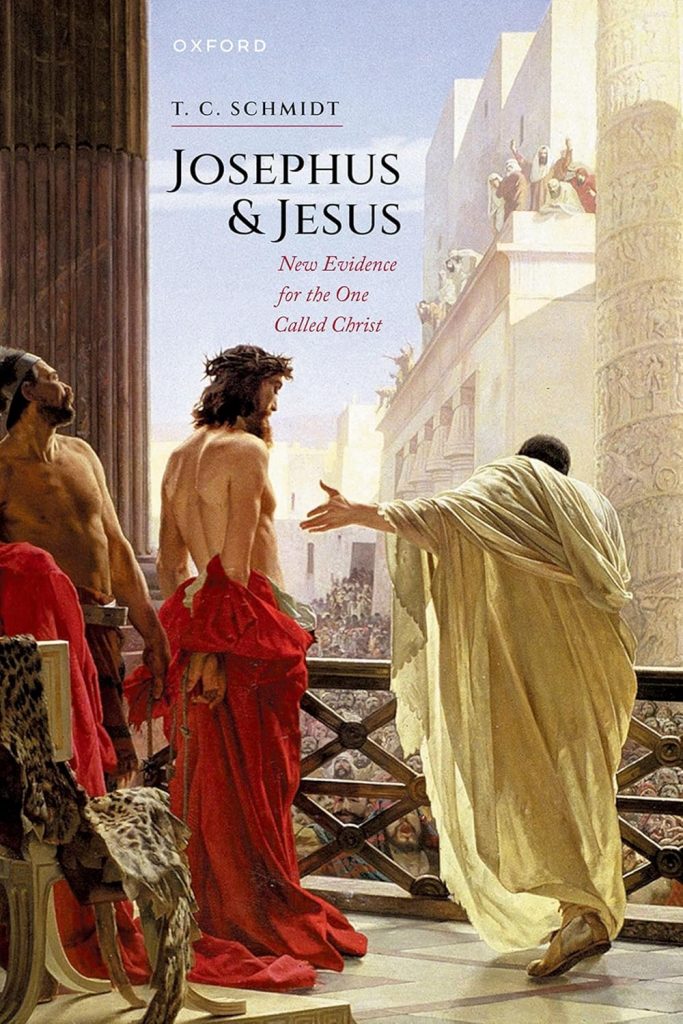
My chief source for everything I have said about Josephus is a book published by Oxford Univ. Press in 2025 by Prof. Thomas Schmidt, PhD, titled "Josephus & Jesus: New Evidence for the One Called Christ." (Note that "Christ" is the Greek word for the Hebrew word, "Messiah." Thus, "Christ" and "Messiah" mean the same thing.)
Schmidt is a classics professor at Fairfield University (Connecticut) and also holds a courtesy faculty appointment at Princeton University.
He earned his PhD degree at Yale. The man's scholarly credentials are impeccable. He also happens to be a self-professed Christian.
Click here for a PDF copy of his entire book. (Ignore my highlighting.)
You just read the “earliest description of Jesus given by a non-Christian,” writes Prof. Schmidt.
So famous is what Josephus said that scholars have given his account of Jesus its own name: the Testimonium Flavianum.[1]Schmidt, p. 1.
Not only this, but this description of Jesus was written by a man who was familiar with many of the principal people in the whole Jesus story, among them very likely some of the disciples, and almost certainly the apostle Paul (another Pharisee, by the way), and the individuals in the Sanhedrin who participated in Jesus’s trial and execution, and, not least, people in Galilee[2]Pronounced “Gal-lel-lee.” who had known Jesus — and perhaps even been healed by him.
This makes Josephus a phenomenal witness to the Jesus narrative: its authenticity and its significance at the time. By the way, Josephus’s account of the proceedings of the Sanhedrin and role of the High Priest at Jesus’s trial all corroborate what the Gospel writers (Matthew, Mark, Luke, and John) wrote.
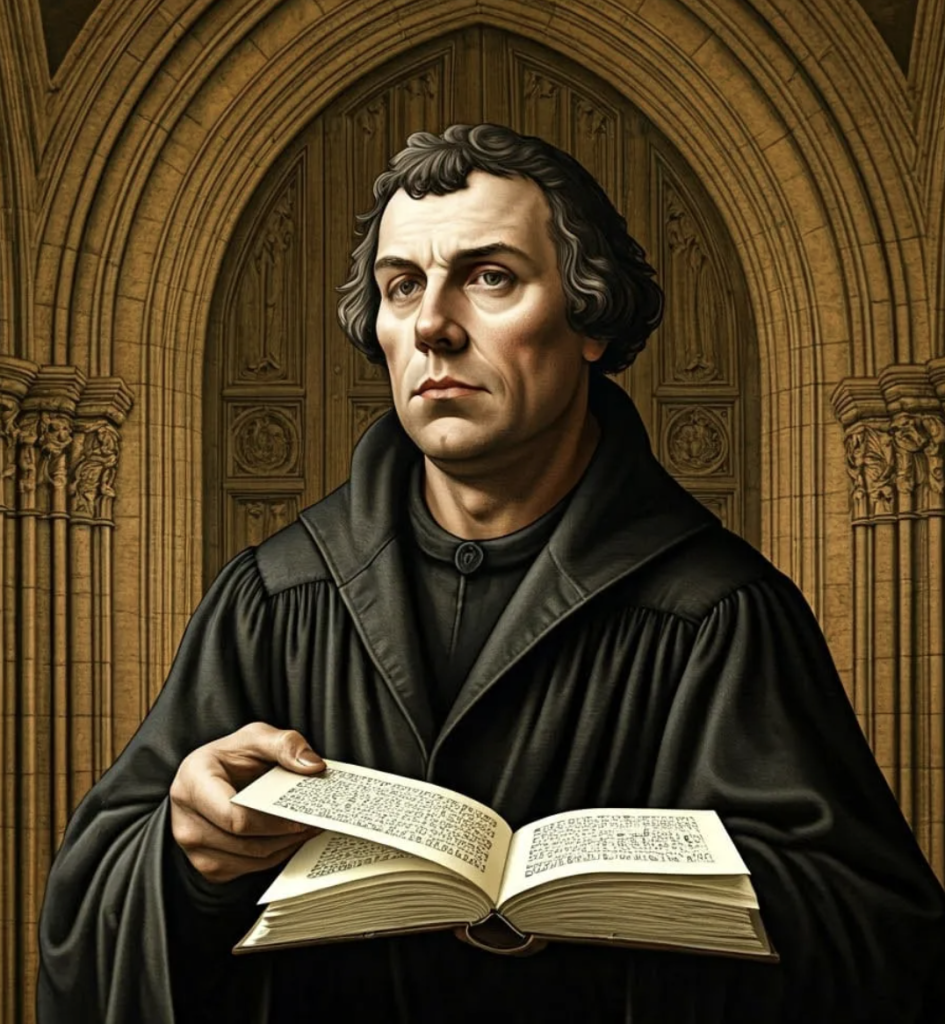
Martin Luther essentially made the same point. The crux of his case against the Roman Catholic Church was that one must have faith in Jesus ("faith, alone," as he put it) and not rely on performing the rituals and teachings of the Church. That is, he emphasized a personal faith in Jesus, not faith in the Bible per se.
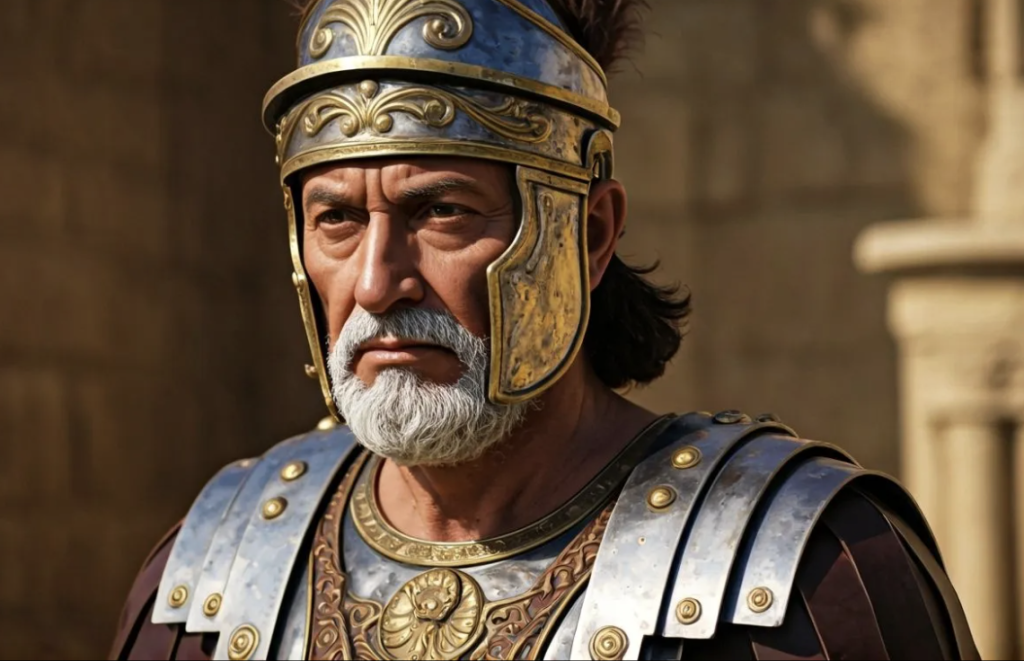
Pontius Pilate
Roman Procurator over Judaea

-
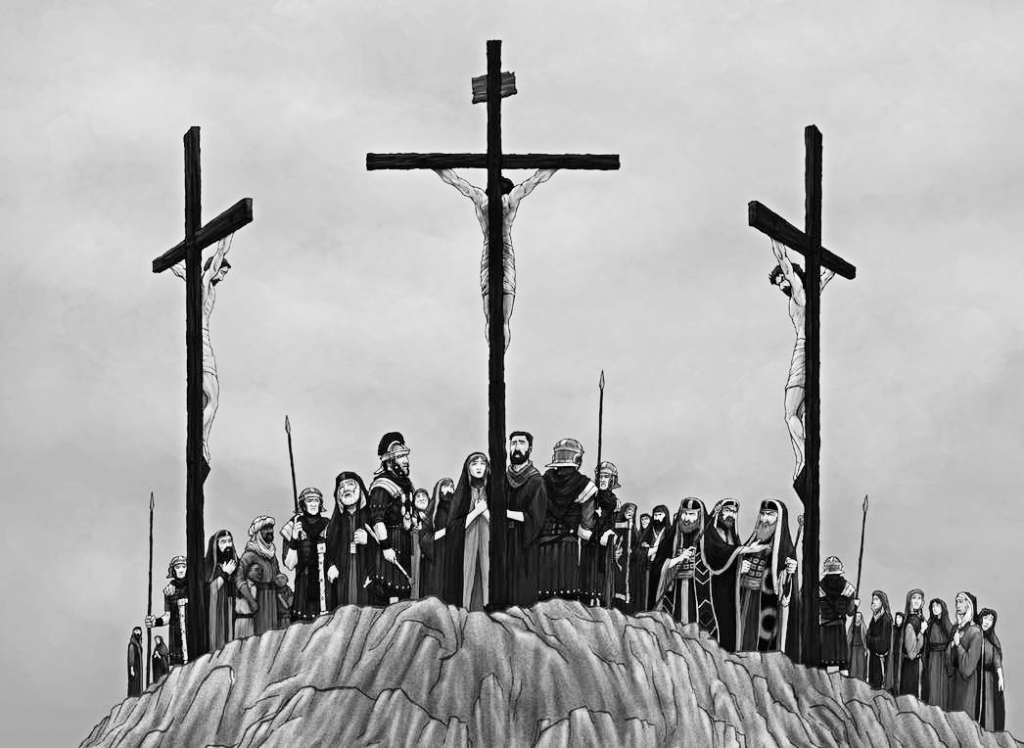
Crucifixion Executed by the Hebrew Bible clergy
Many people don't grasp that Jesus was denounced and executed by the Jewish scholars and clergy of the Hebrew Bible, which is our (Christian) Old Testament. (Read that sentence over again to appreciate its full import.)
-
Blasphemy Son of God! An outrageous claim!
Jesus preached a wholly new concept of God, new and different from the Hebrew doctrine of Yahweh (Jehovah), a figure who is often remote, petulant, angry, spectacularly punitive and cruel (witness the commandments to slaughter Canaanites).
Interestingly, the "Lord" referred to throughout the Psalms is generally a very different sort of personage from Jehovah (Yahweh) throughout the remainder of the Old Testament. The Psalmist's Lord is more like a good shepard.
Jesus, we are told, claimed he was the son of God. This claim infuriated the Hebrew temple priests and administrators as absolutely outrageous and dangerous to canonical teaching and social cohesion, for there was no separation of church and state (and, for that matter, there never has been, anywhere).
It was these individuals who clamored before Pilate and Herod that he be executed for unforgivable blasphemy and heresy. Another way of putting this is, they considered Jesus a false prophet.
-
Hebrew Bible
The OT and NT are
very different propositionsThe Old Testament (OT, i.e., the Hebrew Bible) describes the religion of the Jews up to and beyond the advent of Jesus. The New Testament (NT) expounds a new message: of faith in Jesus. Child-like faith in Jesus (that is, the narrative of the New Testament) versus the chronicle of the Children of Israel and their god, Jehovah (Yahweh) (that is, the narrative of the Old Testament) are two very different propositions.
Once you wrap your mind around this, you begin to understand why Jesus was killed by the adherents of the Old Testament (i.e., the Old Covenant with Yahweh) — a covenant (agreement) defined by seemingly endless regulations, most of them prohibitions. "Thou shalt not . . . !"
-
Biblians A Biblian is not necessarily a Christian
For those of you who are Christians, some of what I will say regarding Jesus and, for that matter, about God will blow your mind. Some of you will not accept it, in most cases, I would guess, because you are not so much a Christian as you are a Biblian (i.e., a believer in the Bible).
That is, your faith is in the Bible, not in Jesus.
I remind you, the keepers of Old Testament othodoxy are the ones who insisted Jesus was a fake and needed to be exterminated. These keepers of the orthodoxy pursued Jesus's followers in a similarly relentless manner. Witness the stoning of Stephen, the martyrdom of Jesus's brother, James (discussed by Josephus), and execution of numerous other disciples.
Note that before his conversion, the apostle Paul was one of these "exterminators" of the Jesus movement.
-
Pilate & Herod Both were willing to let him go
Note that Jesus was not executed by the Roman administrator of Judaea, Pontius Pilate, who was indifferent to what he considered trivial theological disputes within a religion he considered odious, as did all the Roman administrators. Nor was Jesus executed by the Roman puppet Jewish king, Herod.
I repeat, he was executed by the Old Testament Biblians.
Up till now, you were probably under the impression that everything we know about Jesus is confined to the four Gospels (Matthew, Mark, Luke, John) and Paul’s letters (called epistles), along with letters from several other disciples — all of this contained in the New Testament.
Now, pay close attention to what I’m about to say. Josephus’s account of Jesus of Nazareth takes Jesus out of the Bible and inserts him into a larger sphere of interest. With Flavius Josephus’s 20-volume history of the Jews (published in AD 93 or 94), we have a non-Christian and non-religious source telling us that Jesus was a most extraordinary individual — extraordinarily wise and a doer of extraordinary deeds.
The implication is that Jesus of Nazareth knew things the rest of us don’t grasp. I quote Josephus, again:
There was a certain Jesus, a wise man, if indeed one ought to call him a man, for he was a doer of incredible deeds, a teacher of men who receive truisms with pleasure.
One can infer from Josephus’s remarks that Jesus knew things that transcend our usual understanding of religion, theology, and even philosophy.
It's as if Jesus climbed up a stairway out of the muddled way of thinking and engaging with the world around us — and walked out into the light.
Plato discussed this phenomenon.

One can go further and say Josephus implies that Jesus knew things which go beyond, or are outside, our understanding of the way reality works.
Pause. Take a deep breath. “The way reality works.” Hmm, this sounds like we’re drifting over into physics.
You’re right. We are.
The acknowledged authority on “the way reality works” (i.e., what we now call physics) in Josephus’s time was Aristotle.[3]Pronounced “Aris-totle.” Back then, the word “physics” wasn’t used; it was called “natural philosophy.”
Aristotle
We can now rephrase what Josephus said about Jesus, putting it in a modern idiom (modern “way of speaking”): “Jesus,” writes Josephus, “is said to have conducted himself and done things and known things that don’t conform to Aristotelian principles of reality.” In saying this, Josephus would be correct — but this doesn’t make Jesus wrong. (Actually, as I will show, it was Aristotle who was wrong.)
The Greek Puppeteers
Left to right: Aristotle, Plato, Socrates

Remember what I said in the first article (lecture) about the Greek puppeteers, and how wrong they were? I invoked Nietzsche[4]Pronounced “Neet-she.” in support of this.
Two thousand years after Aristotle and Josephus and the Gospel writers and St. Paul, we have a better idea of the reality and consciousness that Jesus was tapping into. This is where we’re going with this series of articles.
I am going to take Jesus out of religion and theology and conventional philosophy and move him into a physics most of you don’t know about. The reason you don’t know about it is because 20th-century physicists found it too “spooky” (Einstein’s word for it) and, more importantly, too impractical for their purposes. Yes, I include Einstein in this list of nay-sayers. (In his later years, Einstein tried to refute this newly-perceived dimension of physics, and failed spectacularly.)
The apostle Paul
We’re not yet done with the “historical” Jesus. That is, Jesus in his time and place: Palestine in the first century AD.
We need to take up St. Paul, who is an interesting counterpoint to Josephus. Paul would have been some years older than Josephus. Both men were Pharisees. Neither man met Jesus in person.
Paul began his adult career as a rabid critic of Jesus and his followers. He literally hunted them down.
Then, something dramatic happened: Paul had an epiphany. He experienced a bizarre event that he interpreted as an encounter with Jesus in a non-bodily form.
The rest is history. Paul did a 180 degree about-face and became the chief spokesman and architect of Christianity as we understand and practice it to this day.
This, ladies and gentlemen, is very interesting and worth exploring.